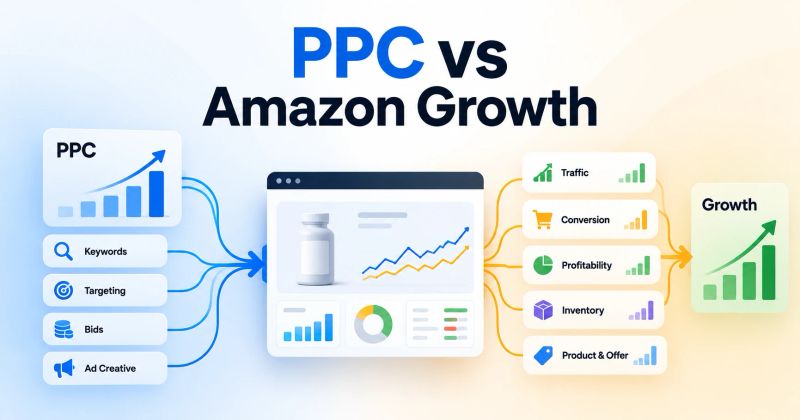
Amazon PPC (Pay-Per-Click) is one of the most effective ways to increase product visibility, drive qualified traffic, and generate sales on Amazon. Unlike traditional digital advertising, Amazon PPC reaches shoppers who are actively searching for products and are often ready to buy.
However, profitable Amazon PPC isn't simply about increasing bids or spending more. Successful advertisers build well-structured campaigns, target the right keywords, monitor performance metrics, and continuously optimize based on data.
This guide explains how Amazon PPC works, campaign types, bidding strategies, optimization techniques, and best practices to help you scale profitably in 2026.
What Is Amazon PPC?
Amazon PPC (Pay-Per-Click) is Amazon's advertising model where advertisers pay only when shoppers click on their ads.
These ads appear across:
- Amazon Search Results
- Product Detail Pages
- Product Pages
- Amazon Store pages
The objective is to place products in front of customers searching for relevant keywords, increasing visibility and driving more sales.
Why Amazon PPC Matters
Organic rankings alone are no longer enough for most brands.
Amazon PPC helps sellers:
- Launch new products faster
- Increase product visibility
- Generate consistent sales
- Improve keyword rankings
- Defend branded keywords
- Grow market share
- Scale revenue profitably
When combined with strong product listings and competitive pricing, PPC becomes one of the most powerful growth channels on Amazon.
How Amazon PPC Works
Amazon PPC uses a real-time auction system.
The process is simple:
- 1A customer searches for a product.
- 2Advertisers bid on relevant keywords.
- 3Amazon evaluates bids and ad relevance.
- 4Winning ads appear in search results.
- 5Advertisers pay only when someone clicks the ad.
Winning isn't determined by the highest bid alone. Amazon also considers product relevance, expected click-through rate (CTR), and historical performance.
Types of Amazon PPC Campaigns
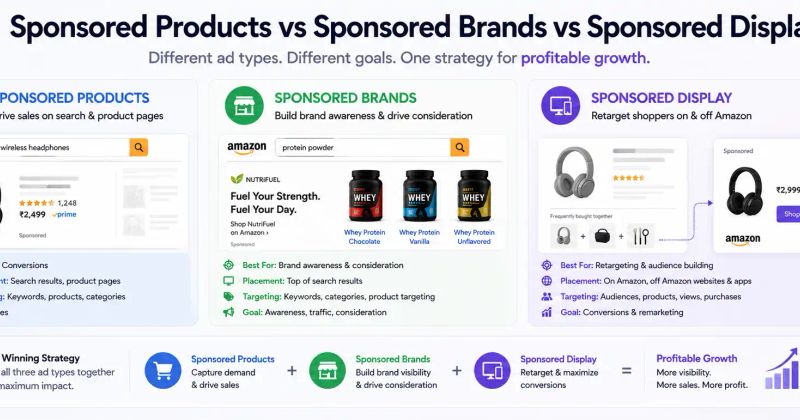
Sponsored Products
Sponsored Products promote individual listings directly within Amazon search results and product pages.
Best for:
- Driving sales
- Launching new products
- Increasing keyword rankings
Sponsored Brands
Sponsored Brands display your logo, custom headline, and multiple products.
Ideal for:
- Brand awareness
- Store traffic
- Product collections
Sponsored Display
Sponsored Display helps brands reach shoppers based on browsing behavior and interests.
Use it for:
- Retargeting visitors
- Cross-selling products
- Reaching competitor audiences
Automatic vs Manual Campaigns
Automatic Campaigns
Amazon automatically matches your products with relevant search terms.
Advantages
- Easy to set up
- Finds new keywords
- Great for new products
Disadvantages
- Less control
- Higher chance of irrelevant traffic
Manual Campaigns
You choose keywords, bids, and targeting.
Advantages
- Greater control
- Better optimization
- Improved profitability
Disadvantages
- Requires ongoing management
A common strategy is to use automatic campaigns for keyword discovery and manual campaigns to scale profitable search terms.
Keyword Match Types
Amazon offers three keyword match types.
Broad Match
Shows ads for searches related to your keyword.
Best for discovering new search terms.
Phrase Match
Shows ads when the customer's search includes your keyword phrase.
Provides a balance between reach and control.
Exact Match
Shows ads only for searches closely matching your keyword.
Offers the highest relevance and often the strongest conversion rates.
Amazon PPC Bidding Strategies
Amazon supports three bidding options.
Dynamic Bids – Down Only
Amazon lowers bids when conversions are less likely.
Suitable for advertisers focused on efficiency.
Dynamic Bids – Up and Down
Amazon increases bids for searches likely to convert and lowers them for weaker opportunities.
Best for campaigns with proven performance.
Fixed Bids
Amazon uses your bid without automatic adjustments.
Useful when you want complete control over bidding.
Campaign Structure Best Practices
A clean campaign structure simplifies optimization.
Example:
- Campaign
- Sponsored Products
- Ad Group
- Exact Match Keywords
- Ad Group
- Phrase Match Keywords
- Ad Group
- Broad Match Keywords
- Ad Group
- Sponsored Products
Avoid mixing unrelated products within the same campaign. Organize campaigns by product category, objective, or match type.
Budget Optimization
More budget doesn't always mean better results.
To maximize profitability:
- Allocate budget to high-performing campaigns.
- Increase budgets gradually.
- Pause consistently unprofitable keywords.
- Review spend weekly rather than daily.
- Don't spread budget across too many campaigns.
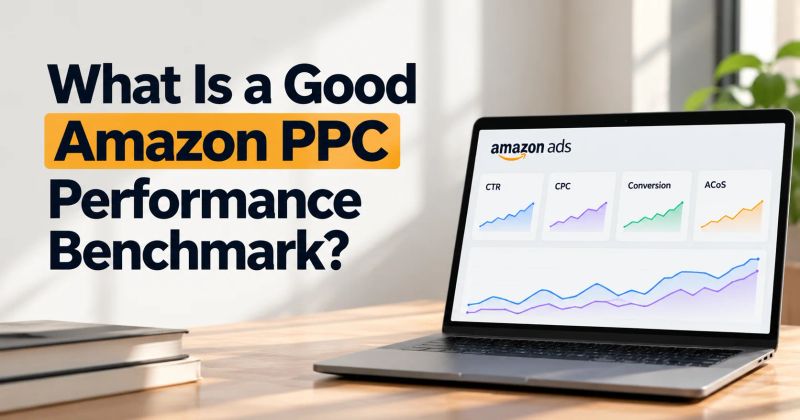
Key Amazon PPC Metrics
ACoS (Advertising Cost of Sales)
ACoS measures advertising spend relative to attributed sales.
Lower ACoS generally indicates higher efficiency.
TACoS (Total Advertising Cost of Sales)
TACoS measures advertising spend against total sales.
Unlike ACoS, TACoS reflects advertising's impact on overall business growth.
ROAS (Return on Ad Spend)
ROAS shows how much revenue is generated for every dollar spent on advertising.
Higher ROAS generally indicates stronger campaign efficiency.
CTR (Click-Through Rate)
CTR measures how often shoppers click your ads after seeing them.
Low CTR often suggests:
- Weak product images
- Poor titles
- Low keyword relevance
CPC (Cost Per Click)
CPC is the average amount paid for each click.
Lower CPC with strong conversions improves profitability.
Conversion Rate
Conversion Rate measures the percentage of clicks that result in purchases.
Improving product listings often has a greater impact than simply increasing traffic.
Amazon PPC Optimization Framework
Successful advertisers follow a structured process.
Step 1: Define Your Goal
Examples:
- Product launch
- Profitability
- Organic ranking
- Brand awareness
Step 2: Analyze Campaign Performance
Review:
- Search terms
- Clicks
- Orders
- Spend
- Conversion rate
- ACoS
Step 3: Eliminate Wasted Spend
Look for:
- High-click, no-sale keywords
- Expensive search terms
- Duplicate targeting
Add negative keywords where appropriate.
Step 4: Optimize
Actions include:
- Adjust bids
- Improve product listings
- Refine targeting
- Increase winning budgets
- Test new keywords
Step 5: Measure Again
Amazon PPC optimization is an ongoing process, not a one-time task.
Common Amazon PPC Mistakes
Many advertisers lose money because of avoidable mistakes.
Common issues include:
- Chasing the lowest ACoS
- Ignoring TACoS
- Optimizing campaigns every day
- Never reviewing search term reports
- Not adding negative keywords
- Mixing branded and non-branded keywords
- Running all products in one campaign
- Increasing bids without sufficient data
Focus on long-term trends instead of reacting to daily performance changes.
Best Practices for Scaling Amazon PPC
As campaigns grow, complexity increases.
Successful brands typically:
- Separate branded and generic campaigns.
- Use automatic campaigns for keyword discovery.
- Move winning search terms into manual campaigns.
- Optimize bids based on performance.
- Monitor search term reports weekly.
- Improve listings before increasing ad spend.
- Measure profitability alongside advertising metrics.
Scaling profitably is about improving efficiency, not simply increasing budget.
Final Thoughts
Amazon PPC is one of the fastest ways to grow sales on Amazon, but sustainable success comes from strategy rather than spending. Well-structured campaigns, thoughtful keyword targeting, disciplined optimization, and continuous measurement are the foundations of long-term profitability.
Instead of chasing vanity metrics, focus on building campaigns that support your business goals, improve customer acquisition, and maximize return on investment.
As Amazon's advertising platform continues to evolve, advertisers who combine strong fundamentals with data-driven optimization will be better positioned to scale profitably in 2026 and beyond.
Suggested Internal Links
- Amazon Advertising Guide (2026)
- What Is Amazon ACoS? (Future)
- Amazon TACoS Explained (Future)
- Sponsored Products vs Sponsored Brands (Future)
Key takeaways
- Amazon Ads are most effective when campaign objectives, listing quality, and optimization strategy are aligned.
Frequently asked questions
Start with a budget that allows meaningful data collection while staying within your profit margins. Increase spending only after identifying profitable campaigns.
About the author

Amazon Ads operators
Yogendra Kashyap is the Founder of SellerRoot and an Amazon Ads expert with 9+ years of experience helping brands grow through data-driven advertising. His expertise spans Amazon PPC, campaign optimization, search term analysis, and marketplace growth. Together with the SellerRoot team, he is building AI-powered tools for Amazon advertisers while sharing practical, experience-backed insights to help brands improve profitability and scale on Amazon.
Turn Amazon Advertising Insights into Action
Discover hidden optimization opportunities, improve campaign performance, and make data-driven decisions with SellerRoot's AI-powered Amazon advertising platform.